A material palette is not a mood board. It is a set of promises about how a house will age, sound and feel underfoot in twenty years.
When we began the villa at Al Khawaneej, the brief carried a familiar tension. The family wanted a home rooted in Emirati narrative — the pomegranate, the ghaf tree, the date palm, henna — without a single decorative motif on a wall. Heritage as material, not as ornament. That constraint decided the palette, and the palette decided almost everything else.
Three materials, and the discipline of refusing the fourth
Restraint is easy to say and difficult to hold. Every project reaches a point — usually around the third revision — where adding one more finish feels like the solution to a room that isn't working. It rarely is. A room that needs a fourth material is usually a room with a proportion problem.
At Al Khawaneej the answer was three, used everywhere and used differently:
- Travertine-look flooring — the continuous ground. One surface running through living, kitchen and circulation so the eye never registers a threshold.
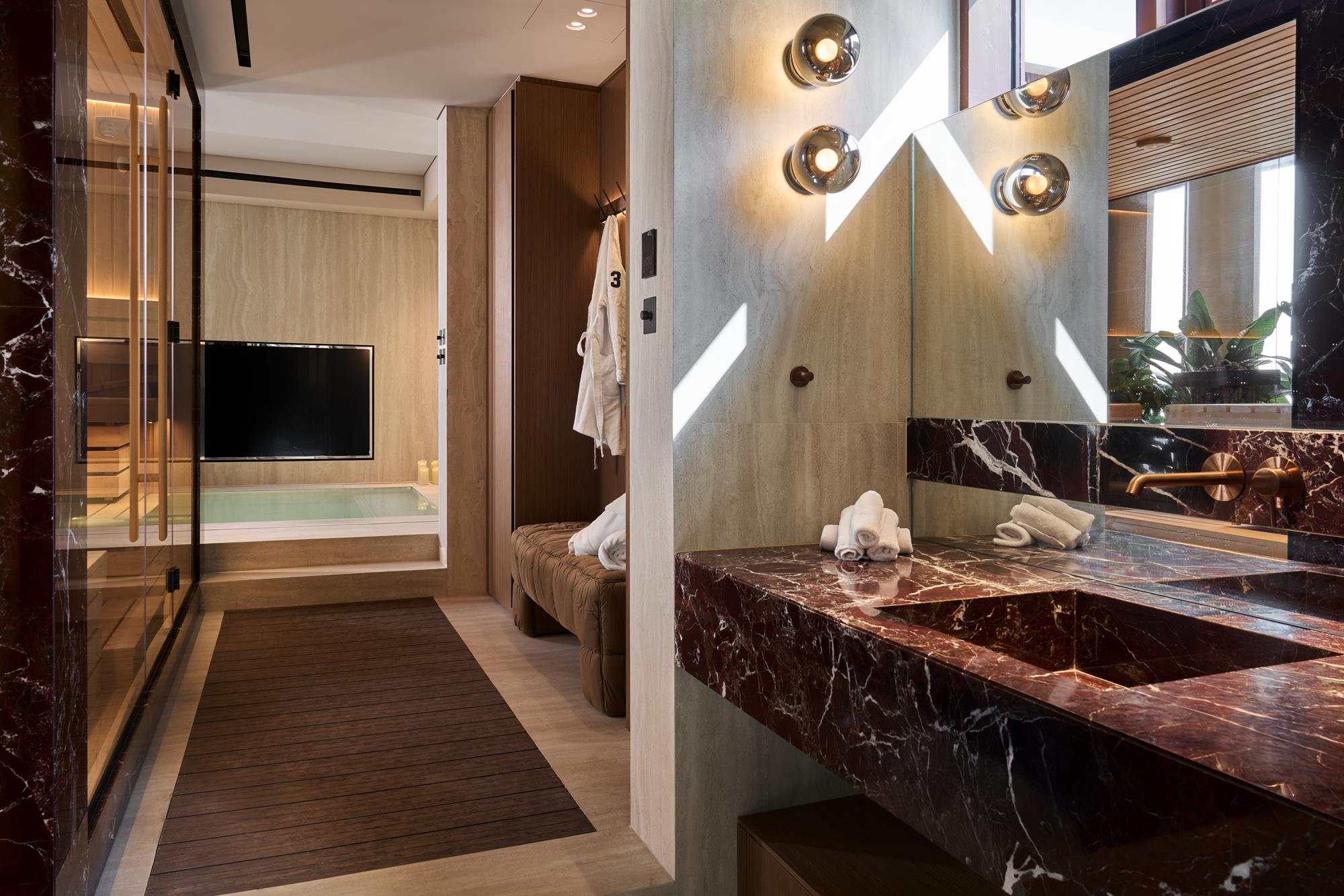
- Burgundy marble — the single note of richness, drawn from the colour of fresh dates. It appears in the wellness suite and nowhere it isn't earned.
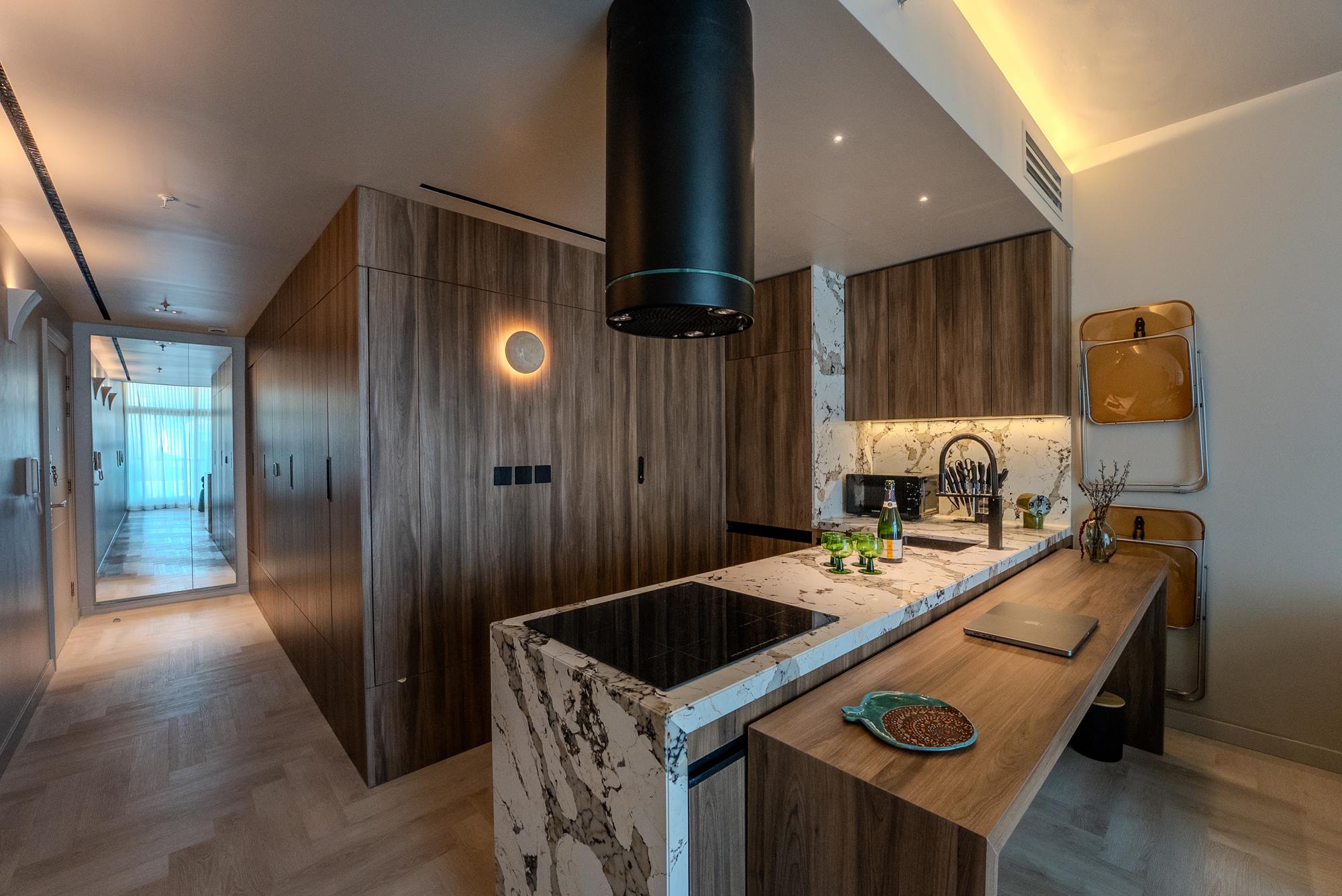
- American walnut joinery — depth and permanence, cut to full height so the storage reads as architecture rather than furniture.
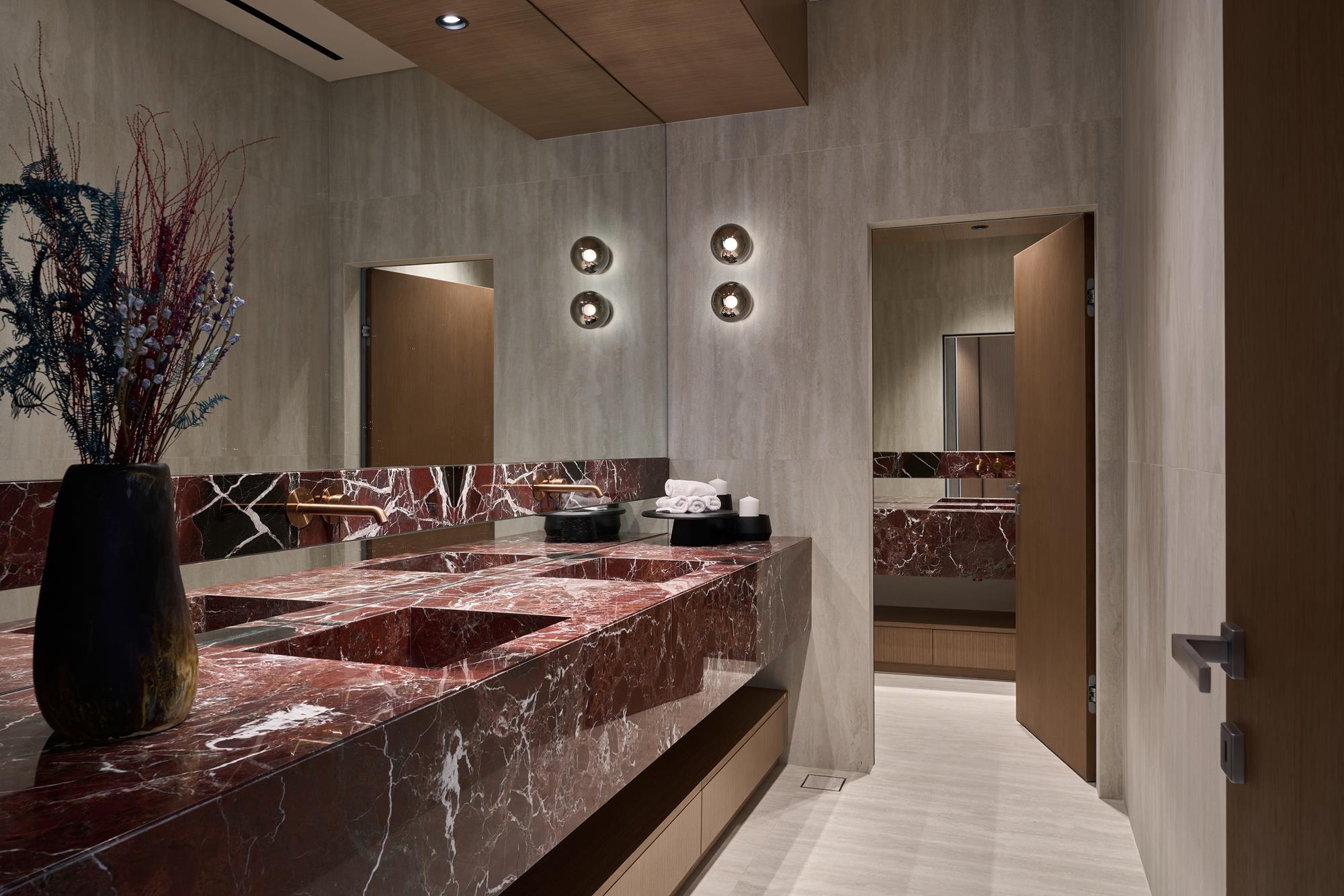
Luxury is not the number of materials in a room. It is the confidence to stop at three.
Choose materials that deepen rather than date
The question we ask of every sample is simple: what will this look like after ten years of family life? Some finishes only ever move away from their best day — high-gloss lacquer, mirror-polished chrome, anything that shows its first scratch as a wound. Others accumulate. Walnut darkens and warms. Travertine takes the faint polish of routine. Unlacquered brass moves from yellow to something closer to bronze.
In a climate like Dubai's, there is a second question layered on top. Strong daylight is punishing on colour, and a palette that photographs beautifully in a European studio can read bleached and thin under a Gulf sun. We test every stone and every veneer under the light it will actually live in, at the hour the family will actually use the room.
What we look for in a sample
- Movement that reads at two metres, not only at arm's length.
- A honed or brushed surface over a polished one — light should sit in a material, not bounce off it.
- Repeatability. A slab you cannot match again is a repair problem waiting to happen.
- Warmth in the undertone. Nothing in our palette is a pure grey, just as nothing is a pure white.
Let the light do the decorating
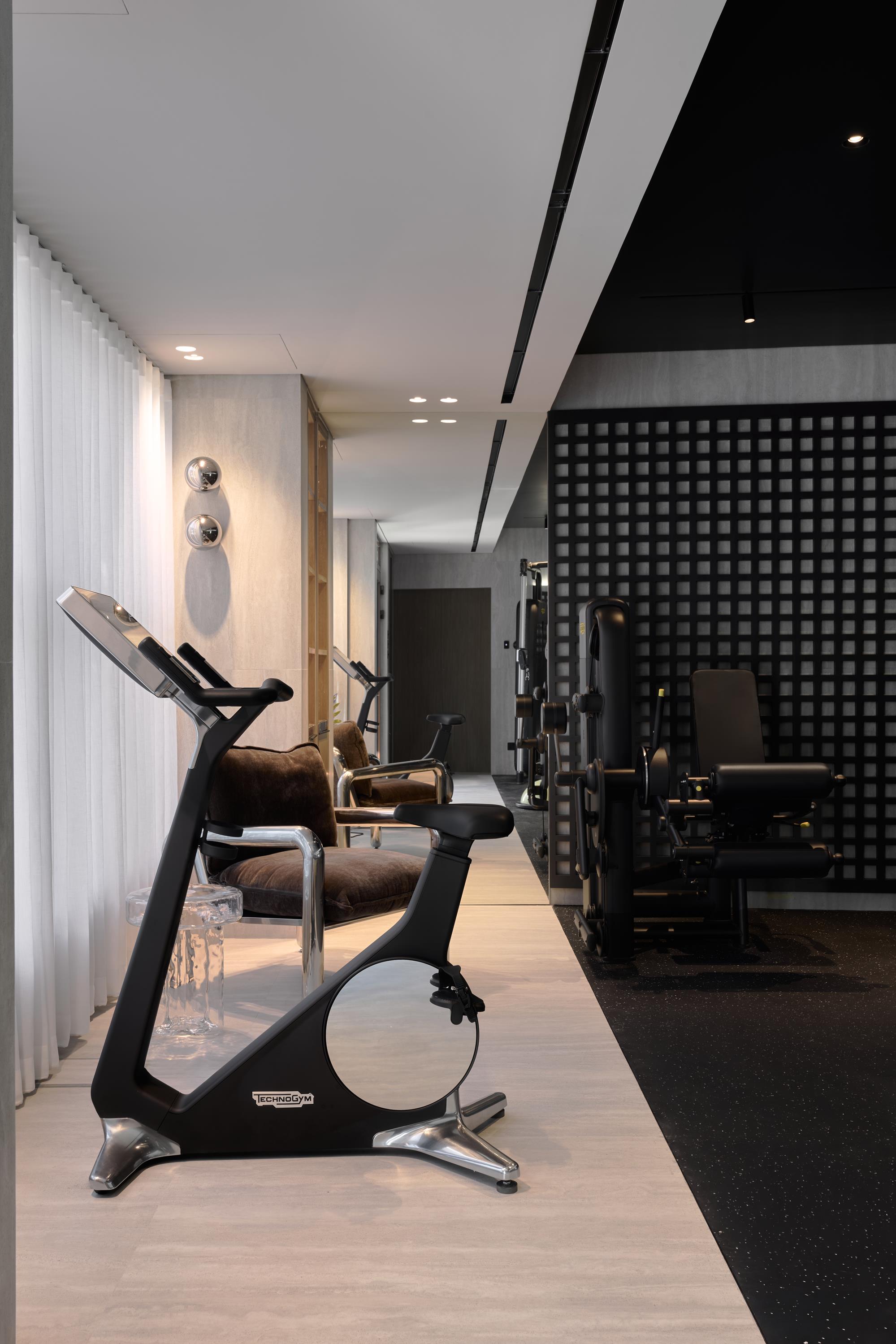
A restrained palette places an enormous load on lighting. If there is no pattern and no ornament, then texture and shadow are the composition. Natural light is controlled first — planned around the sun's path so that a travertine wall is raking and textural in the morning and flat and calm by evening. Artificial light then follows the same logic: layered, warm, and almost always concealed. We would rather see what a fitting does than see the fitting.
Planting as the fourth material — the exception that proves the rule
There is, in the end, a fourth element. Layered planting softens the architectural lines and holds the connection to nature that the brief asked for. But it behaves unlike the others: it changes, it needs care, and it is the only part of the palette the family actively tends. That participation is the point. A house you look after is a house you belong to.
- Set the palette early and let it govern the plan, not the other way around.
- Three primary materials is usually enough for an entire residence.
- Test every sample under the daylight of the actual site and hour of use.
- Specify for the material's tenth year, not its first day.
- Reserve your one rich note — and spend it once.
The result at Al Khawaneej is a house that does not announce itself. Guests notice the calm before they notice the stone, which is exactly the order we intend. This is what we mean by contextual design: spaces that honour identity, embrace modern living, and carry quiet luxury with clarity and purpose.
You can see the finished project in the Al Khawaneej Villa case study, or read how the same thinking works at fifty square metres in Fifty Square Metres, No Compromise.